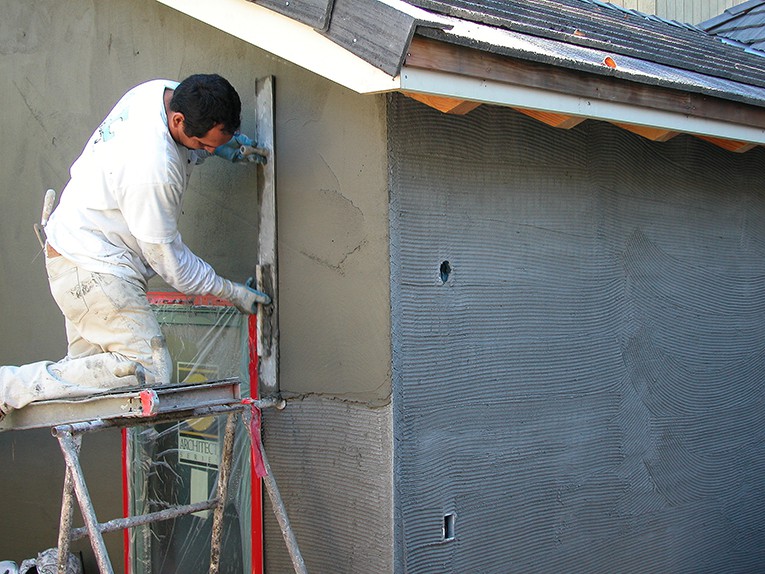
Stucco Maintenance Tips for San Antonio Homes
Season-by-season stucco maintenance checklist for San Antonio homes — what to inspect, when, and which findings mean call a contractor now.

Stucco is genuinely low-maintenance compared to many exterior finishes, but it is not zero-maintenance. A simple annual routine keeps your San Antonio home looking its best and catches small issues before they become expensive problems. Here is what to include in your maintenance schedule.
Walk the perimeter of your home twice a year — once in spring before summer heat arrives, and once in fall after monsoon season. Look for new cracks, stains, or areas where the color appears different. Take photos to compare year over year. Changes that develop slowly are easy to miss without documentation.
Inspect all caulked joints at windows, doors, and utility penetrations. Texas heat breaks down sealants faster than cooler climates. Replace any caulk that is cracking, pulling away, or missing. Use a high-quality polyurethane or silicone sealant rated for exterior use and temperature extremes.
Clear any vegetation growing against or near stucco walls. Plants trap moisture against the surface, promote algae growth, and can physically damage the finish with roots or tendrils. Maintain a 12-inch gap between landscaping and your stucco surfaces.
Clean your stucco annually with a garden hose and soft-bristle brush. Work from top to bottom and rinse thoroughly. For stubborn stains or algae, use a solution of one part bleach to ten parts water, applied with a pump sprayer. Let it sit for 10 minutes, then rinse. Never pressure wash at high settings.
Check the base of your walls where stucco meets the foundation. This transition point is vulnerable to splash-back from rain, sprinkler overspray, and soil buildup. Ensure the weep screed is visible and not buried by soil or mulch. This gap allows moisture to exit the wall system.
Document your maintenance in a simple log. Note the date, what you inspected, and any issues found. This record helps track developing problems and provides valuable information if you ever need professional repair work. It also demonstrates maintenance history to potential buyers.
Spring Checklist (March–May)
Walk every elevation after the last freeze. Look for hairline cracks that opened over winter, especially at window corners and where the roofline meets a wall. Check that weep screed at the base of the wall is clear of mulch and soil — stucco needs two inches of clearance above grade and four inches above paving to drain. Clear it if landscaping has crept up.
Summer Checklist (June–August)
Watch the west and south elevations for chalking. Rub a dark cloth on the finish — if it comes away powdery, the coating has lost its UV binder and is due for stucco painting or recoating within a year. Check irrigation spray patterns. A head hitting the wall every morning is the single most common cause of avoidable stucco failure in San Antonio.
Fall Checklist (September–November)
After the first heavy rain, look for dark staining that does not dry within 48 hours. Persistent dark patches mean water is sitting behind the finish. Check caulk joints at windows, doors and penetrations and replace anything that has pulled away or hardened.
Winter Checklist (December–February)
San Antonio freeze-thaw cycles are short but sharp. After any hard freeze, inspect for spalling — small chips or flakes lifting off the surface. Spalling means water got in before the freeze and expanded. Have it looked at rather than patching over it.
When to Stop Inspecting and Call Someone
Call a contractor if you find any of these: a crack wider than 1/16 inch, a hollow sound when you tap an area that used to sound solid, staining that persists more than a week after rain, or bulging anywhere on the wall. Those four findings mean water is already behind the system. Learn more about stucco repair in San Antonio.
Get Expert Help in San Antonio
Free, no-obligation estimates from a local crew that has been doing stucco work across San Antonio, Boerne, Schertz, Helotes, and New Braunfels for years.
Get a Free EstimateRelated Stucco Services
Our team is available for free inspections and estimates on any stucco project in San Antonio.