What Is Stucco? A Homeowner's Guide to Materials, Process & Types
What is stucco, what is it made of, and is it the same as concrete? A plain-language guide to stucco materials, application, and why it dominates San Antonio exteriors.
Stucco is a cement-based exterior finish applied in multiple layers over a wall surface to create a hard, durable, weather-resistant shell. It has been used on buildings for centuries and remains one of the most popular exterior materials in the American Southwest — especially in San Antonio, where stucco covers more homes than any other finish. If you are researching exterior options for a new build, evaluating a home to purchase, or simply curious about what is on your walls, this guide covers what stucco actually is, what it is made of, and how it differs from other materials.
What Is Stucco Made Of?
Traditional stucco is made from four simple ingredients: Portland cement, sand, lime, and water. Portland cement provides the structural strength — it is the same binding agent used in concrete. Sand acts as aggregate, giving the mix body and texture. Lime improves workability and flexibility, making the wet mix easier to apply and slightly more forgiving once cured. Water activates the cement and allows the mix to be troweled onto walls. These ingredients are combined on-site by the crew, and the exact proportions vary slightly depending on the coat being applied and the local climate.
Modern stucco finishes sometimes add synthetic polymers or acrylic resins to improve flexibility, color retention, and crack resistance. These are called acrylic or polymer-modified finishes and are applied as a thin final coat over the traditional cement base. They offer a wider range of colors and slightly better crack bridging, though they are less breathable than pure cement finishes.
Is Stucco the Same as Concrete?
Stucco and concrete share Portland cement as their primary binding agent, which is why people often ask whether they are the same material. They are not. Concrete uses coarse aggregate — gravel or crushed stone — along with sand, cement, and water, and it is poured into forms to create thick structural elements like foundations, driveways, and walls. Stucco uses only fine sand as aggregate and is troweled onto an existing wall surface in thin layers. Concrete is a structural material that holds up buildings. Stucco is a finish material that protects and beautifies the outside of a building that is already structurally complete.
How Is Stucco Applied?
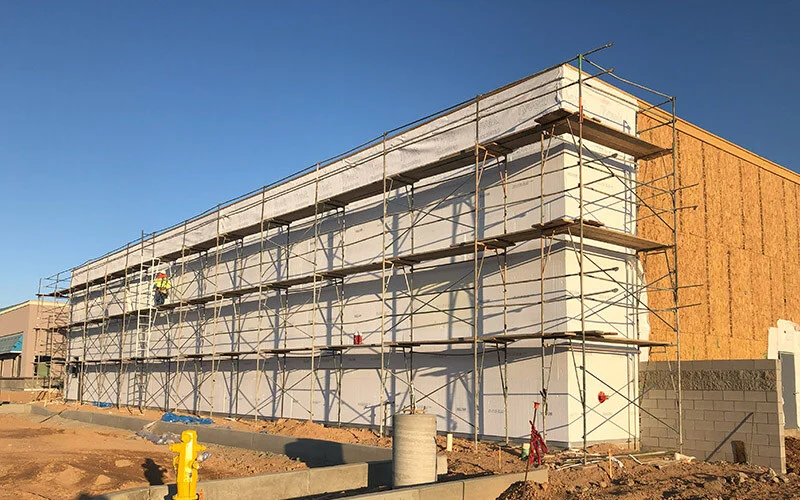
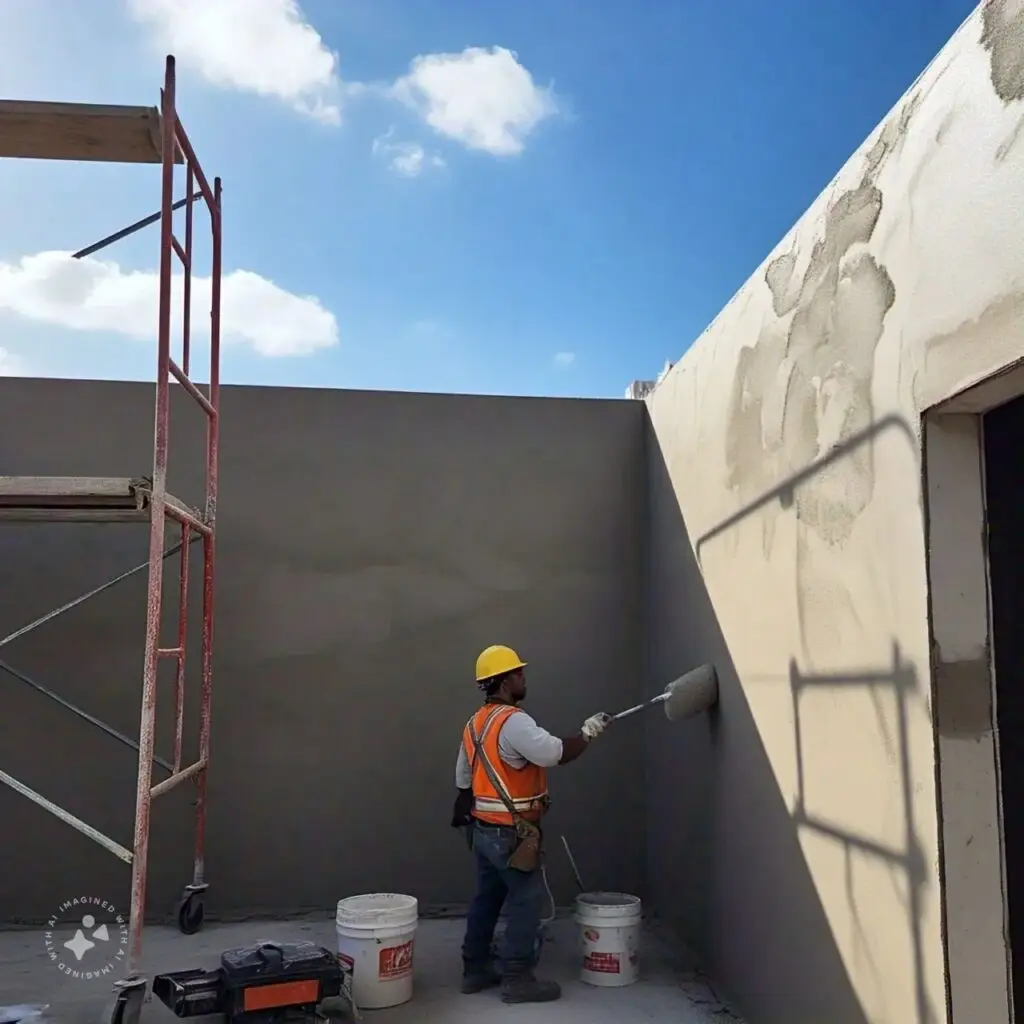
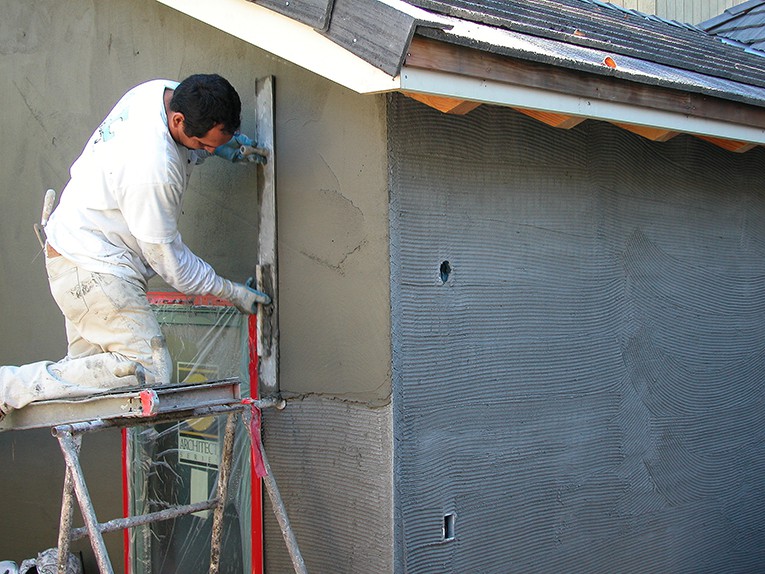
Traditional stucco is applied in three coats over metal lath that is fastened to the wall sheathing. The first coat — the scratch coat — is about three-eighths of an inch thick and is scored with grooves while wet so the next layer can grip it. The second coat — the brown coat — builds the wall out to its full thickness and is leveled smooth. The third coat — the finish coat — is much thinner and provides the color and texture you see from the street. Each coat must cure properly before the next is applied; rushing this process leads to cracking and premature failure. The entire system is about seven-eighths of an inch thick when complete. For a deeper look at each stage, read our guide to the three stages of stucco.
Traditional Stucco vs. EIFS (Synthetic Stucco)
Not all stucco is the same. EIFS — Exterior Insulation and Finish System — looks like stucco from the street but is built around a foam insulation board covered with a thin acrylic finish. EIFS is lighter, provides better insulation, and allows for intricate decorative details, but it is softer, more easily damaged by impact, and depends entirely on sealed joints to keep water out. Traditional cement stucco is harder, more breathable, and more forgiving. Most older San Antonio homes have traditional stucco; many newer custom homes in Stone Oak and The Dominion use EIFS. Our full EIFS vs. traditional stucco comparison covers the differences in detail.
Why Stucco Is So Common in San Antonio
San Antonio has used stucco for well over a century because it is perfectly matched to the local climate and architectural tradition. Stucco handles the extreme heat, high humidity, and intense UV radiation of South Texas without warping, buckling, or fading the way vinyl and some other materials do. It is fire-resistant, pest-proof, and architecturally flexible enough to suit the Spanish Colonial, Mediterranean, Mission Revival, and modern ranch styles that define San Antonio neighborhoods from Alamo Heights to the Westside. It also lasts 50 to 80 years with only routine maintenance — far longer than most alternatives. For homeowners weighing stucco against other exterior options, our stucco vs. other siding materials guide compares cost, durability, and climate performance side by side.
Is Stucco Right for Your Home?
If you are building or renovating in San Antonio, stucco is almost always a strong choice. It delivers the best combination of durability, climate fit, architectural flexibility, and long-term value of any exterior finish available in our market. The key is quality installation — the material itself is simple, but applying it correctly requires skilled labor and proper curing, and nearly every common stucco problem traces back to a shortcut at this stage. Our stucco installation team handles new builds, retrofits, and additions throughout the San Antonio metro. For existing stucco that needs attention, visit our stucco repair page or call (210) 871-8490 for a free inspection.
Get Expert Help in San Antonio
Free, no-obligation estimates from a local crew that has been doing stucco work across San Antonio, Boerne, Schertz, Helotes, and New Braunfels for years.
Get a Free EstimateRelated Stucco Services
Our team is available for free inspections and estimates on any stucco project in San Antonio.