EIFS vs Traditional Stucco: Cost & Maintenance Compared
Understanding the differences between synthetic (EIFS) and traditional stucco systems helps you make informed decisions about your exterior.
EIFS vs traditional stucco is one of the most common questions San Antonio homeowners ask before starting a new build, a remodel, or a repair. The two systems look almost identical from across the street, but underneath the finish coat they could not be more different — and choosing the wrong system, or treating them the same when they need maintenance, leads to expensive failures. This guide breaks down what each system actually is, how they perform in the South Texas climate, what they cost, and how to maintain them so they last.
What Is Traditional Stucco?
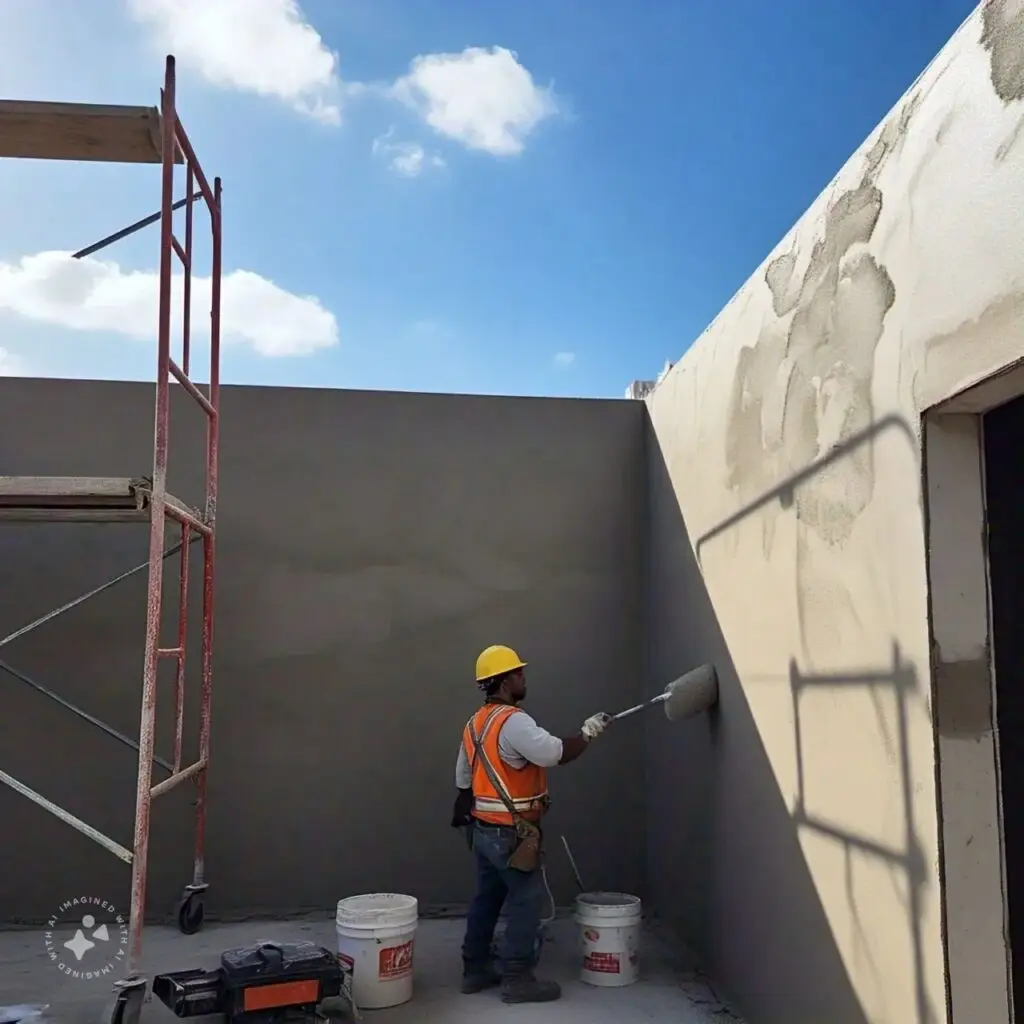
Traditional stucco — sometimes called hard-coat stucco, three-coat stucco, or Portland-cement stucco — is a cement-based material applied in three distinct layers over metal lath that is fastened to the wall sheathing. The first layer is the scratch coat, which is grooved while wet so the next coat can grip it. The second layer is the brown coat, which builds out the wall to the proper thickness. The third and final layer is the finish coat, which provides color and texture. The total thickness of a properly installed three-coat system is about seven-eighths of an inch, and the result is a hard, rigid, breathable shell that is fire-resistant and extremely durable.
Traditional stucco has been used in San Antonio for well over a hundred years for good reason: it tolerates our climate, it pairs beautifully with the Spanish Colonial, Mediterranean, and Mission Revival styles common across the city, and when properly installed it can last 50 to 80 years with only routine maintenance. Most older stucco homes in Alamo Heights, Olmos Park, Monte Vista, and the King William District are traditional three-coat systems.
What Is EIFS (Synthetic Stucco)?
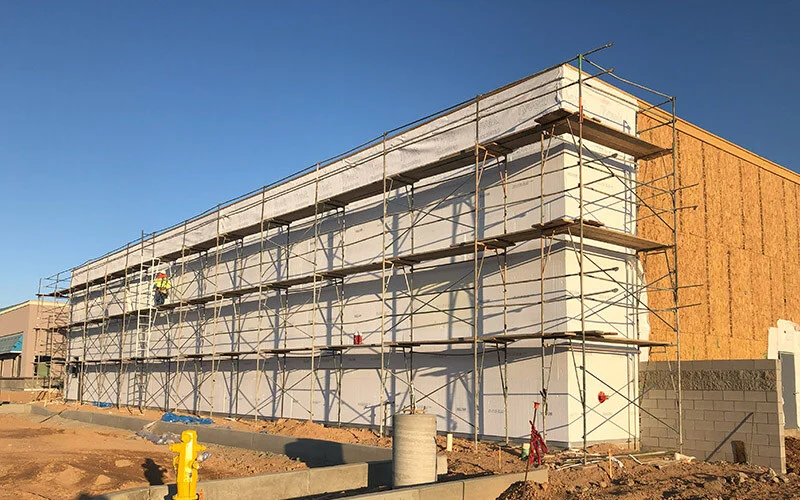
EIFS stands for Exterior Insulation and Finish System. Unlike traditional stucco, EIFS is built around an insulation board — typically expanded polystyrene foam — that is adhered directly to the exterior sheathing. The foam board is then covered with a thin polymer-modified base coat reinforced with fiberglass mesh, and a synthetic acrylic finish coat is applied on top. The total thickness is much thinner than traditional stucco, but the system is significantly lighter and provides far better insulation values.
EIFS gained popularity in the 1980s and 1990s for its energy efficiency and design flexibility. It can be shaped into intricate architectural details, foam reveals, and quoins that would be difficult or impossible with traditional cement stucco. Many newer custom homes in Stone Oak, The Dominion, and Cordillera Ranch use EIFS specifically for these design advantages.
Moisture Management: The Biggest Difference
The single most important difference between EIFS and traditional stucco is how they handle moisture. Traditional stucco is porous and breathable. It absorbs some moisture during rain events, then releases that moisture through evaporation when the weather dries. The system relies on a quality moisture barrier behind the lath and a properly placed weep screed at the base of the wall to handle anything that gets past the surface.
EIFS, on the other hand, creates a nearly waterproof exterior. The acrylic finish coat is impermeable, and the foam insulation does not allow water to pass through it. That sounds like an advantage until you realize what happens when water does get behind the system through unsealed window flashings, cracked caulk at penetrations, or impact damage. Once water is trapped behind EIFS, it has nowhere to go. It saturates the substrate, rots sheathing, promotes mold growth, and eventually causes the foam to delaminate from the wall. This is why modern EIFS installations now require drainage planes behind the foam — but many older San Antonio EIFS installations do not have them.
Durability and Impact Resistance
Traditional stucco is hard and rigid. You can hit it with a baseball, lean a ladder against it, or have a hailstorm come through, and the wall is fine. The downside is that the same rigidity means it cracks when the substrate moves — and on our expansive South Texas clay soils, walls move. Cracks in traditional stucco are normal and repairable.
EIFS is the opposite. The thin polymer coating over soft foam is easily damaged by impact. A weed trimmer, a falling branch, a child with a baseball, or hail of even moderate size can punch through the finish and damage the foam. Because EIFS depends on its waterproof skin to keep moisture out, every dent and puncture is a potential leak path. EIFS does, however, tolerate substrate movement better than traditional stucco — the flexible base coat and mesh allow some flexing without cracking.
Cost Comparison
In San Antonio, traditional stucco installation runs about $8 to $15 per square foot for a three-coat system, depending on wall preparation, finish complexity, and accessibility. EIFS typically runs $9 to $18 per square foot installed, slightly more on average because of the foam board, mesh, and specialized finish materials. EIFS often pays back the cost difference through energy savings — the foam board provides R-4 to R-12 of additional insulation depending on thickness, which meaningfully reduces cooling costs in San Antonio summers.
Repair costs diverge sharply between the two systems. Traditional stucco crack and patch repair starts around $300 for small jobs and is rarely complicated. EIFS repair almost always involves more labor because the foam, mesh, and base coat all have to be rebuilt in proper sequence, and any moisture-damaged substrate behind the foam has to be replaced. A serious EIFS water-damage repair can run $5,000 to $20,000+ if a large section of wall has to be opened up.
Maintenance Requirements
Traditional stucco maintenance is simple. Walk your home twice a year, fill any new cracks with appropriate flexible sealants, repaint or re-coat every 10 to 15 years, and address any staining or moisture issues promptly. The system is forgiving — most problems are visible from the outside, easy to diagnose, and straightforward to repair.
EIFS maintenance is more involved. Every sealant joint at windows, doors, utility penetrations, and roof transitions needs to be inspected annually because the system depends on those joints staying watertight. Any dent, hole, or impact damage needs to be repaired immediately, not deferred. Pressure washing should be avoided entirely on EIFS — the high-pressure water can drive moisture through caulked joints and behind the foam. Gentle hand-washing with a soft brush and a garden hose is the right approach.
How to Tell Which System You Have
If you are buying a home or you have lived in your house for years and are not sure whether your stucco is traditional or EIFS, there are a few quick tests. Tap firmly on the wall with your knuckle. Traditional stucco sounds solid and feels hard. EIFS sounds slightly hollow and gives a tiny bit under firm pressure. Look at the trim details — EIFS often has thick foam reveals and aggressive ornamentation that would be impractical in cement stucco. Examine an inconspicuous spot for any damage that has exposed the underlying material; you will see either cement and metal lath (traditional) or foam board (EIFS).
EIFS vs Stucco: Side-by-Side Comparison
Here is how the two systems stack up across the factors that matter most in the San Antonio climate. Thickness: traditional stucco is about 7/8 inch; EIFS is 1 to 4 inches (mostly foam). Weight: traditional stucco weighs about 10 lbs per square foot; EIFS weighs about 1 to 3 lbs. Impact resistance: traditional stucco is excellent (hard cement shell); EIFS is poor (soft foam behind thin acrylic). Moisture handling: traditional stucco breathes and drains through weep screed; EIFS relies on sealed joints and drainage plane. Insulation value: traditional stucco provides minimal R-value; EIFS provides R-4 to R-12 depending on foam thickness. Lifespan: traditional stucco lasts 50 to 80 years; EIFS lasts 30 to 50 years with proper maintenance. Installation cost in San Antonio: traditional runs $8 to $15 per square foot; EIFS runs $9 to $18 per square foot. Maintenance: traditional stucco needs crack fill and re-coat every 15 to 25 years; EIFS needs annual sealant inspection and immediate repair of any impact damage.
Which System Is Right for Your San Antonio Home?
There is no universally correct answer — it depends on the home, the budget, and how the system will be maintained. Traditional stucco is the right call for homeowners who prioritize durability, impact resistance, and traditional San Antonio architecture, and who do not want to fuss over annual sealant inspections. EIFS makes sense for energy-conscious homeowners building custom homes who want intricate design details and superior insulation, and who are willing to maintain the system rigorously.
If you have an existing EIFS home in San Antonio and you are seeing signs of moisture damage — staining, soft spots, mold smell, or sealant failures around windows — do not delay. Our stucco repair team handles EIFS moisture damage repair routinely, and the longer it sits, the more substrate has to be replaced. If you are weighing a new install or full replacement, visit our homepage to see the full range of stucco services we offer across the San Antonio metro.
Get Expert Help in San Antonio
Free, no-obligation estimates from a local crew that has been doing stucco work across San Antonio, Boerne, Schertz, Helotes, and New Braunfels for years.
Get a Free EstimateRelated Stucco Services
Our team is available for free inspections and estimates on any stucco project in San Antonio.